
How Coins Were Made: A Brief History of Coin Manufacturing
In 640 BC, the ancient kingdom of Lydia minted the world’s first known coins, which were small, oval pieces made of electrum, a natural alloy of gold and silver.
These Lydian Lion coins not only marked the beginning of currency as we know it but also laid the foundation for how economies would function for thousands of years to come.
The history of coins is more than a timeline of metal and machines; it’s a reflection of civilization’s progress.
From simple hand-struck tokens to precision-engineered modern currency, the process of making a minted coin has evolved alongside trade, technology, and national identity.
Learning how coins are manufactured reveals not only economic shifts but also artistry, power, and innovation across cultures.
Here, we’ll explore the earliest minting methods, the transition to screw presses and steam-powered minting, modern techniques in coin production, how manufacturing advancements improved consistency and scale, and the evolution of U.S. coinage.
With over 15 years spent researching the coin history of nations around the world, I’ve come to see each stage of minting as a window into the priorities and possibilities of the time. After reading this article, I’m sure you will too.
Origins of Coin Manufacturing
The history of coins begins in the ancient world, where the need for standardized currency helped shape early economies and trade systems.
The first coins were not just tools of commerce but symbols of political authority and technological innovation.
Lydian and Electrum Coins
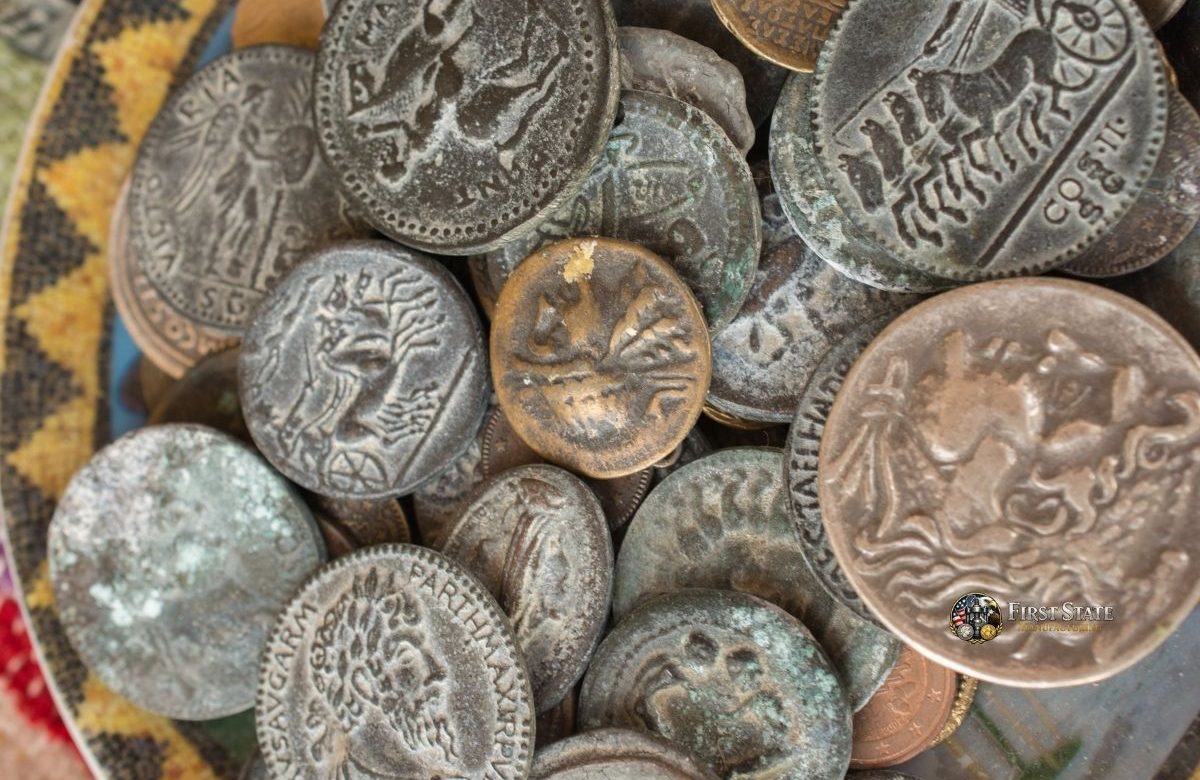
The earliest known minted coins were produced around 640 BC in Lydia, a region in what is now western Turkey. These coins, known as Lydian Lion coins, were made of electrum, a naturally occurring alloy of gold and silver.
They featured simple stamped designs such as a lion head, which symbolized royal authority. The use of electrum was both practical and symbolic, offering intrinsic value and a durable medium for trade.
King Croesus of Lydia is credited with a major advancement in coin minting by refining electrum into separate gold and silver coins known as Croeseids.
This shift created a more reliable system of currency with consistent value, supporting the rise of retail trade. As Herodotus noted, the Lydians were the first people to use gold and silver coins and to engage in retail transactions using money.
Greek and Persian Coinage
The innovation of coinage quickly spread from Lydia to nearby Greek city-states such as Cyme. Early Greek coins often featured symbolic animals or mythological figures and were struck using a punch system that left an incuse mark on the reverse.
These coins played a vital role in expanding market economies throughout the Mediterranean.
After conquering Lydia around 546 BC, Cyrus the Great embraced its coinage system, introducing it into the Persian Empire.
Persian coins such as the gold daric and silver siglos continued Lydian design traditions while incorporating Persian imagery and inscriptions. These coins helped unify the vast Persian Empire under a single monetary system.
Chinese and Roman Innovations
In ancient China, coinage developed independently. As early as the 11th century BCE, the Chinese Shang dynasty produced cast bronze money.
These coins, often shaped like knives or spades, reflected the agricultural economy and were cast using molds, a method distinct from the hammered coinage of the West.
By the time of the Han dynasty, round coins with central holes had become standard and were widely used across East Asia.
Roman coinage began around 300 BC, much later than in the East. Early Roman coins were heavy cast bronzes, but the system evolved to include gold, silver, and copper denominations.
The term “mint” originates from the Temple of Juno Moneta in Rome, where coins were produced. Juno Moneta’s association with money gave rise to the modern terms “money” and “mint.”
Early Hand-Struck Coins and Hammered Minting
Before machines revolutionized coin production, coins were made entirely by hand using basic tools and techniques. These early methods laid the groundwork for the artistry and standardization that would follow.
Hammer and Anvil Technique
The most common early technique for minting coins involved placing a blank metal disc, or planchet, between two engraved dies. One die was fixed on an anvil while the other was struck with a hammer.
This process required considerable strength and precision, as misalignment often resulted in off-center or uneven impressions.
Use of Punches and Incuse Designs
To improve accuracy, early mints used punches with incuse (sunken) designs on the reverse side of the die. These punches helped guide the hammer strike and introduced rudimentary reverse designs.
Some designs even formed patterns, such as swastikas or squares, which later evolved into more elaborate imagery.
Transition to Double-Sided Dies
Over time, both sides of the coin began to feature engraved designs. This required more advanced die-cutting skills but allowed for greater artistic expression and more secure coinage.
Double-sided dies became standard across Greek, Roman, and Persian mints, marking a significant step forward in the progression of coin design and utility.
Mechanized Minting: Screw Presses and Steam Power
The Renaissance and Industrial Age brought dramatic changes to how coins were manufactured. The introduction of mechanical presses revolutionized minting by improving efficiency and consistency.
Introduction of the Screw Press
The screw press, introduced in the 16th century, used a rotating screw mechanism to apply downward pressure and strike coins with greater force and precision.
It replaced manual hammering and allowed for uniform thickness and sharper details.
Benefits:
- Consistent impressions
- Reduced labor
- Higher production rates
Steam-Powered Coin Presses
By the early 19th century, steam power further transformed coin production. The British Royal Mint adopted steam presses in 1810, followed by mints across Europe and the United States.
In 1833, U.S. Mint official Franklin Peale studied European minting and brought back steam-powered equipment, setting the stage for modern American coinage.
Impact on Coin Quality and Volume
Mechanization allowed mints to produce coins with intricate designs and high consistency. This increased public trust in currency and enabled national economies to scale their monetary systems.
Industrialization and Modern Minting Techniques
Coin production in the 20th and 21st centuries built upon these earlier innovations, incorporating new materials, automation, and digital technology.
Electric and Hydraulic Presses
Modern mints employ electric and hydraulic presses capable of producing hundreds of coins per minute. These machines apply uniform pressure, ensuring that each minted coin meets strict tolerances for weight, size, and detail.
- Modern output: Up to 750 coins per minute
- Precision: Tolerances within fractions of a millimeter
Role of Engraving and Digital Design
Today, engravers use computer-aided design (CAD) software to create digital models of coins. These models are then transferred to steel dies using laser engraving, allowing for intricate and consistent designs.
Key advantages include:
- Digital archiving of designs
- Enhanced detail and symmetry
- Faster prototyping and revisions
Quality Control and Anti-Counterfeiting
Modern coin minting includes advanced quality control systems. Optical scanners and weight detectors catch imperfections, while anti-counterfeiting measures such as micro-engraving and latent images help protect against fraud.
Coin Manufacturing in the United States
Colonial Coins and the Spanish Piece of Eight
Before the U.S. Mint was established, early American coins included foreign currency such as the Spanish piece of eight and local issues such as the pine tree shilling.
These coins helped support commerce in the colonies and influenced the design of later American currency.
The Coinage Act of 1792 and the U.S. Mint
The Coinage Act of 1792 created the U.S. Mint and established a decimal-based monetary system. Coin denominations were standardized and included copper cents, silver dimes and dollars, and gold eagles.
- First official coin: The half disme (1792)
- Mint location: Philadelphia
- Designs: Liberty on obverse, eagle on reverse
Early U.S. Coin Designs and Materials
The Flowing Hair dollar (1794) and Draped Bust series, both made with silver, showcased the artistry of early American engravers.
As economic conditions changed, so did coin materials. Rising copper costs led to the discontinuation of the large and half cents and the introduction of smaller and lighter cents, such as the Flying Eagle and Indian Head cents in the mid-19th century.
Advancements That Changed Coin Manufacturing
Standardization and Scalability
Mechanized minting allowed nations to produce identical coins at scale. This consistency improved public confidence in currency and facilitated international trade.
Impact:
- Reliable currency systems
- Easier coin handling and banking
- Reduced counterfeiting
Material Science and Alloys
Advancements in metallurgy led to the use of durable and cost-effective alloys. Copper, nickel, and zinc became standard in circulation coins because they offer resistance to wear and corrosion.
Influence on Global Minting
Techniques developed in the United States and Europe influenced mints worldwide. From Japan to South America, modern mints adopted screw presses, steam power, and eventually digital engraving, creating a global standard for coin production.
The Legacy of Coin Manufacturing
Coin manufacturing is more than a process of shaping metal. It reflects the evolution of societies, economies, and identities.
From the first electrum coins in Lydia to the high-speed presses at the U.S. Mint, each step in coin history reveals how civilizations adapted to new challenges and opportunities.
I continue to be fascinated by how each minted coin carries the legacy of its time, whether it’s an early American coin struck by hand or a modern US mint coin produced with cutting-edge technology.
Every detail, from the metal used to the image engraved, tells a story of innovation and intent.
Why Coin Manufacturing Still Matters
Coins are physical artifacts of economic history. They tell stories of kings and republics, wars and peace, and trade and technology.
Understanding how coins are manufactured not only helps us appreciate their value but also connects us to the broader currents of human history.
Whether you’re holding a Roman denarius, a Spanish dollar, or a modern quarter, you’re holding a piece of the past shaped by tools, powered by machines, and guided by visionaries who understood that money is more than metal.
It’s memory, art, and trust forged into a physical form.