
Discontinued Coins: Why Certain Coins Were Minted and Why They Disappeared
Over a dozen U.S. coin denominations have quietly disappeared from circulation since the 18th century, not because of conspiracy or accident but as a result of inflation, rising production costs, and changing public habits.
For example, the U.S. half cent, which was once a practical unit of commerce, was discontinued in 1857 when it no longer bought anything of value.
Today, these coins are historical artifacts, but their disappearance tells us a great deal about the shifting economics behind minting coins.
In this article, we’ll examine the economic, historical, and practical forces that lead to the end of certain coin denominations.
You’ll soon understand why some coins simply stop making economic sense, what happens when they vanish from circulation, and how they continue to live on in collections and historical records.
Discontinued coins are more than outdated currency; they are milestones in monetary history. As a coin historian, I can tell you with certainty that every discontinued coin has a story worth telling.
The Economics Behind Discontinuing Coins
Governments stop minting certain coin denominations for practical and financial reasons. These decisions often stem from inflation, excessive production costs, or changing public behavior.
Understanding the financial mechanics behind discontinued coins shows how currency adapts to economic realities and hints at what the future may hold.
Inflation and Purchasing Power
Inflation gradually reduces the buying power of money, making low-denomination coins less useful. A coin that once bought a loaf of bread might not even cover the sales tax on a pack of gum today.
This erosion in value leads to coins becoming economically irrelevant.
For example, the U.S. half cent, minted from 1793 to 1857, was discontinued when it could no longer purchase anything of practical worth. Inflation had rendered it obsolete.
Similarly, the large cent, which was roughly the size of a modern half dollar, was phased out in the same year due to its declining utility and bulky format.
Countries around the world have taken similar steps:
- New Zealand discontinued its 1 and 2 cent coins in 1987 and its 5 cent coin in 2006.
- Sweden phased out several low-value coins, including the 1 and 2 öre, over several decades.
- Malaysia eliminated its 1 sen coin in 2008 due to its negligible value.
Production Costs vs. Face Value
Coins cost money to produce. When the cost of raw materials and minting processes exceeds a coin’s face value, governments face negative seigniorage.
Seigniorage is the profit made from producing money, i.e., the difference between the face value and the cost to manufacture it. When that number turns negative, it becomes fiscally unsound to continue minting.
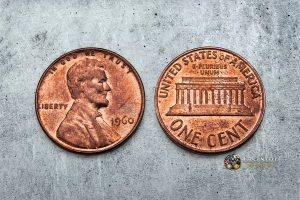
This was a critical issue for the U.S. penny. In recent years, it was costing more than one cent to produce a penny.
In response, the U.S. Mint stopped minting pennies for circulation in 2025. They will continue to be produced only for collectible sets, which justifies the cost through collector premiums.
Coin Usage and Circulation Patterns
Coins can fall out of use long before they are officially discontinued. When businesses and consumers stop using certain denominations, they effectively become obsolete.
Governments often follow public behavior, formalizing the end of a coin’s production once it has ceased to serve a functional purpose.
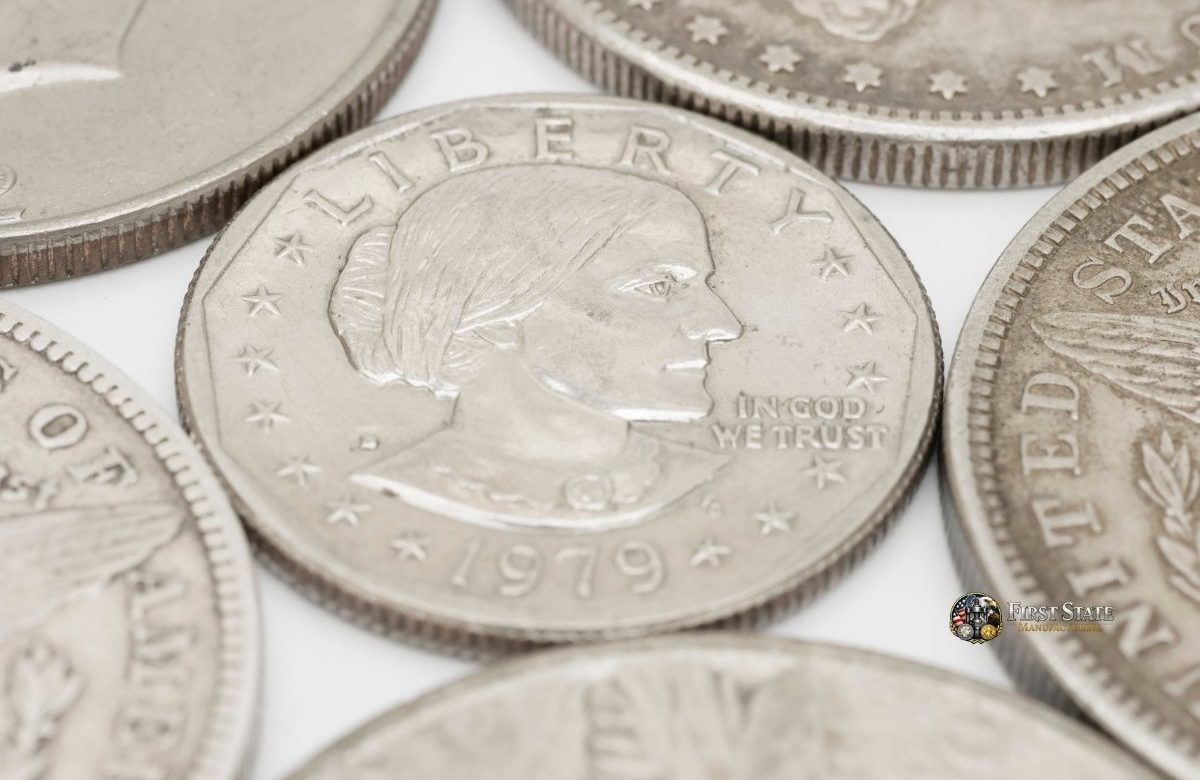
The Susan B. Anthony dollar is a prime example. Minted from 1979 to 1981 and briefly again in 1999, the coin never gained traction with the public.
Its size and color made it easily confused with quarters, leading to widespread rejection. Though it technically remains legal tender, it is rarely seen in circulation today.
Historical US Coin Denominations That Disappeared
The United States has a long history of introducing and later discontinuing coin denominations based on economic needs and public response. Many of these coins were phased out due to inflation, redundancy, or lack of utility.
Half Cent and Large Cent (1793–1857)
The half cent was the smallest denomination ever minted by the U.S., and it served a genuine purpose in the early economy. However, by the mid-19th century, price inflation made it irrelevant.
Similarly, the large cent, which was cumbersome and costly to produce, was replaced by the smaller, more efficient Flying Eagle cent in 1857.
These early copper coins are now prized by collectors, with rare varieties such as the 1796 Liberty Cap half cent fetching significant premiums.
Two-Cent and Three-Cent Pieces (1863–1889)
Introduced during the Civil War, the two-cent piece was created to address coin shortages and promote the use of base metals. It was also the first U.S. coin to bear the motto “In God We Trust.”
The three-cent piece came in both silver and nickel versions, primarily to facilitate small transactions such as postage.
Both denominations became redundant as other coins and paper money filled their roles. They were discontinued by the end of the 19th century.
Twenty-Cent Piece and Half Dime
The twenty-cent piece, minted from 1875 to 1878, is one of the most short-lived and confusing U.S. coins. Its similarity in size and design to the quarter led to public rejection. It was discontinued after just four years.
The half dime, a small silver coin minted from 1792 to 1873, was replaced by the nickel. Though it served a purpose in early commerce, its diminutive size made it impractical for modern use.
Gold Coinage Discontinuation
Gold coins once played a central role in the U.S. monetary system. Their discontinuation reflects a broader shift toward paper money and, later, digital transactions.
$1 to $20 Gold Coins (Post-1933)
In 1933, the U.S. government halted the minting of gold coins for circulation due to the controversial Gold Reserve Act.
This legislation required individuals to turn in their gold coins and certificates, effectively removing gold from daily commerce. The move was part of a larger effort to stabilize the economy during the Great Depression.
Coins such as the $5 Half Eagle, $10 Eagle, and $20 Double Eagle ceased regular production. Today, these coins are highly sought after in the numismatic and bullion markets.
The Stella ($4.00 Coin) Experiment
The Stella was a $4 gold coin produced in 1879 and 1880 as part of a proposal to create an international trade coin.
It was never released for general circulation and exists mainly as a collector’s item. Only a few hundred were minted, making it one of the most valuable and rare discontinued US coins.
Modern Discontinued US Coins and Changes
Recent decades have seen continued adaptation in U.S. coinage, driven by material shortages, public feedback, and cost analysis.
Steel Pennies and Wartime Composition (1943–1946)
During World War II, copper was a critical war material. In 1943, the U.S. Mint produced pennies from zinc-coated steel. These coins were widely disliked for their tendency to rust and their similarity in appearance to dimes.
The Mint quickly reverted to a copper-based composition using salvaged shell casings from 1944 to 1946. Though common, 1943 steel cents remain a popular collectible due to their unique wartime origin.
Susan B. Anthony Dollar (1979–1981, 1999)
The Susan B. Anthony dollar was intended to modernize U.S. coinage and promote gender representation.
Unfortunately, its similarity in size and color to the quarter led to confusion and rejection by the public. It was briefly revived in 1999 but never gained widespread use.
Its failure paved the way for the Sacagawea dollar, which debuted in 2000 with a gold-colored surface and smoother edges for easier identification.
Penny Production Ceases (2025)
Pennies had become a financial burden for the U.S. Mint. Effective November, 12 2025, the penny will no longer be struck for general circulation and will be produced only for collectors.
This shift reflects a growing consensus that the coin no longer serves a practical role in commerce.
International Coin Discontinuation Trends
The discontinuation of coins is not unique to the United States. Countries around the world have phased out denominations that no longer serve economic or practical functions.
Low-Denomination Withdrawals
Several countries have formally retired their smallest denominations:
- Switzerland stopped producing the 1 Rappen coin in 2006.
- New Zealand removed 1 and 2 cent coins in 1987 and the 5 cent in 2006.
- Sweden phased out all öre coins by 2009.
These decisions often followed years of declining public use and rising production costs.
Euro Transition and Legacy Currencies
The introduction of the euro in 2002 marked one of the largest currency transitions in history. National coins such as the German mark, French franc, and Spanish peseta were retired.
While some countries allowed indefinite exchanges, others set deadlines for redemption.
Unofficially Withdrawn Coins
In the United Arab Emirates and Kyrgyzstan, certain small-denomination coins have fallen out of circulation without being formally withdrawn. These coins technically remain legal tender but are no longer used in everyday transactions.
Collector and Historical Significance of Discontinued Coins
Discontinued coins hold a special place in numismatics. Their rarity, historical context, and design variations make them attractive to collectors and historians alike.
Numismatic Rarity and Value
Coins that were minted in small numbers or for short periods often command high prices. For example:
- The 1876-CC two-cent piece has fewer than 20 known survivors
- Early half cents and large cents in high-grade condition can sell for thousands of dollars
Collectors value these coins not just for their metal content but for their historical narratives.
Historical Artifacts of Economic Policy
Every discontinued coin reflects a moment in economic history. Whether issued during wartime, discontinued due to inflation, or created for international trade, these coins serve as tangible records of policy decisions and public sentiment.
Legal Tender and Redemption Considerations
When a coin is discontinued, its legal status can vary. Some remain legal tender indefinitely, while others are subject to redemption deadlines.
Legal Tender vs. Withdrawn vs. Canceled
- Legal tender: The coin is still officially recognized for payment.
- Withdrawn: The coin is removed from circulation but may still be exchanged.
- Canceled: The coin was never released or has been officially demonetized.
Understanding these distinctions helps collectors and holders know whether their coins still hold face value or only collectible worth.
Country-Specific Exchange Policies
Redemption policies differ by country:
- The U.S. allows indefinite redemption of most discontinued coins.
- New Zealand imposed exchange deadlines for its discontinued coins.
- Eurozone countries set varying deadlines for exchanging pre-euro currencies.
Why These Coins Are Still Significant
Discontinued coins reflect the economic pressures, technological advancements, and public behaviors that shape monetary systems.
From the half cent to the Susan B. Anthony dollar, each coin represents a lesson in the evolution of U.S. and global currency. They continue to live on through collectors, historians, and anyone interested in the story of money.
For those who collect or study coins, these denominations offer more than just numismatic value. They provide insight into the changing priorities and challenges of societies throughout history.